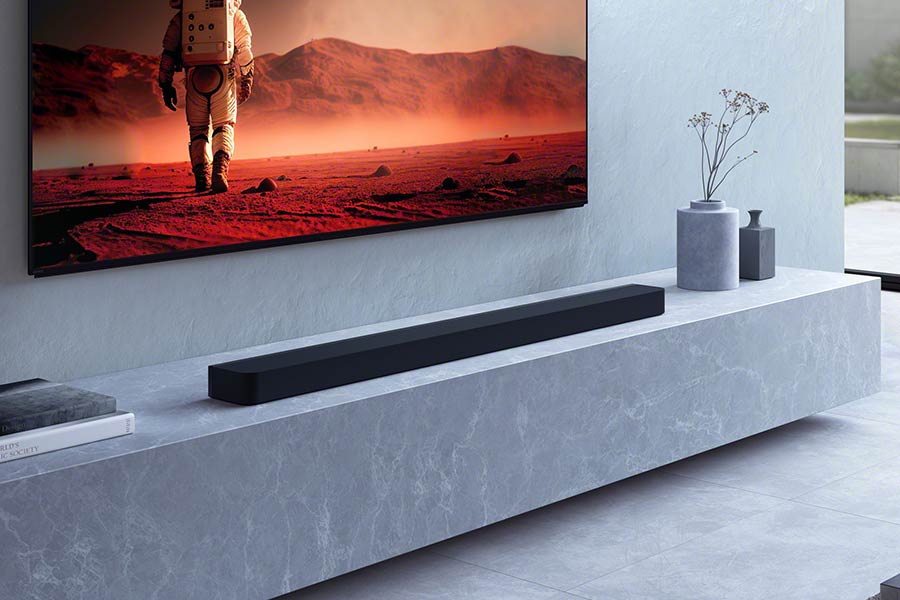
3D sound technology is changing the way you experience audio in your home theater. Unlike traditional surround sound systems, which primarily focus on horizontal sound placement, 3D sound creates an immersive audio environment by incorporating vertical sound elements. This allows you to perceive sounds as coming from above and below, mimicking real-world dynamics.
Dolby Atmos and Auro-3D are leading the way in this evolution of immersive audio formats. Dolby Atmos provides spatial audio by enabling precise placement of sounds in a three-dimensional space, enhancing depth, clarity, and detail. Auro-3D delivers uncompressed immersive audio across various applications, including home theaters, mobile devices, and even car audio systems.
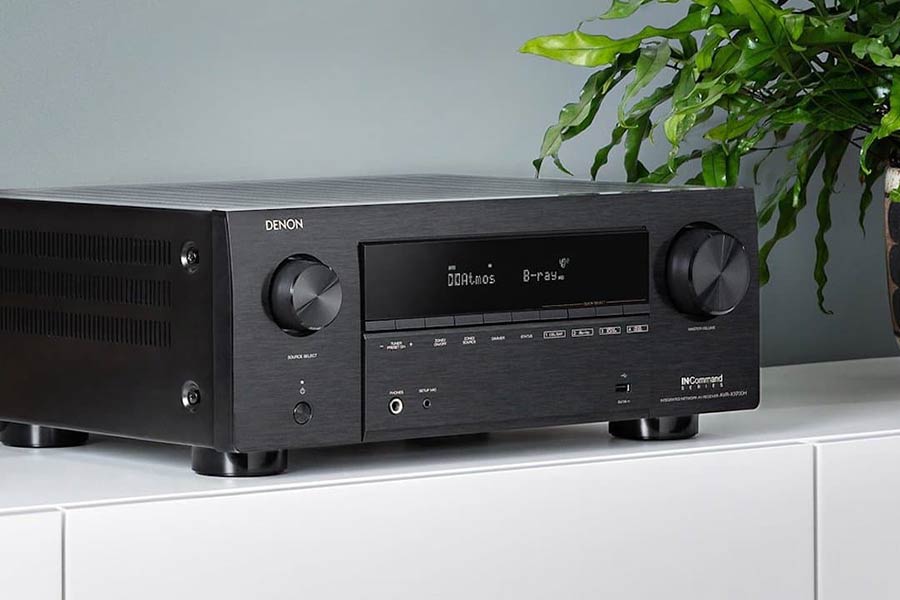
For optimal performance, pairing these advanced audio formats with high-quality receivers like the Denon AVR series is essential. These receivers support Dolby Atmos and Auro-3D, ensuring that you get the most out of your 3D sound setup.
Key takeaway: Integrating 3D sound into your home theater can significantly elevate your viewing experience. The enhanced depth and realism provided by 3D sound technologies like Dolby Atmos and Auro-3D transform ordinary movie nights into immersive cinematic events.
Understanding 3D Sound
What is 3D Sound and How is it Different from Traditional Surround Sound?
3D sound, also known as spatial audio, changes the way you experience audio by creating a multi-dimensional sound environment. Unlike traditional surround sound systems that mainly work on a horizontal level, 3D sound adds an up-and-down element. This means sounds can come from above and below, not just around you. The outcome is a more immersive setting that closely resembles real-world hearing experiences.
How 3D Sound Enhances Your Viewing Experience
By using height channels and advanced sound mixing methods, 3D sound surrounds you with audio. Picture yourself watching an action movie where you can hear helicopters flying overhead or rain falling all around you. This increased sense of realism turns your home theater into an ultra high-definition sensory experience, making scenes more captivating and interesting.
Popular Audio Formats Supporting 3D Sound
Several cutting-edge audio formats support 3D sound:
- Dolby Atmos: Known for its ability to place sounds in specific locations within a three-dimensional space. Dolby Atmos delivers depth, clarity, and detail that significantly enhance movies, music, and games.
- Auro-3D: Provides uncompressed immersive audio and supports various speaker setups. It can convert stereo or traditional surround content to create a broader sound area.
- DTS:X: Another major technology that uses multiple speakers to deliver rich sound environments, ensuring every auditory detail is captured.
These formats are essential in turning your home theater into an immersive space where every whisper and explosion feels incredibly lifelike.
Understanding these aspects of 3D sound helps you appreciate the technological advancements that contribute to a truly immersive experience.
The Science Behind 3D Audio Formats
Creating 3D audio content involves several technical aspects that differentiate it from traditional audio formats. One of the key elements is sound mixing. In 3D sound, audio engineers meticulously place sounds in a three-dimensional space during the mixing process. This differs from conventional surround sound which primarily focuses on horizontal placement around the listener.
Height channels play a crucial role in simulating verticality in sound. These channels add an extra dimension by allowing sounds to come from above and below, enhancing the spatial realism of the audio experience. For instance, in a Dolby Atmos setup, height channels can make you feel like a helicopter is flying overhead or rain is falling from the sky.
Sound Mixing Techniques
Here are some techniques used in sound mixing for 3D audio:
- Object-Based Audio: Unlike channel-based mixing, object-based audio allows each sound to be treated as its own entity. This permits precise positioning within a 3D space.
- Ambisonics: A full-sphere surround sound technique capturing sound sources in all directions using multiple microphones.
- Binaural Recording: Utilizes two microphones arranged to create a 3D stereo sound sensation for headphone listeners.
Spatial Audio Technology
Spatial audio technology ensures that sounds are perceived as coming from various directions and distances. This technology underpins the immersive quality of formats like Dolby Atmos and Auro-3D.
Here are some examples of spatial audio technologies:
- Head Tracking: In VR environments, head tracking adjusts the audio based on head movements, keeping sounds aligned with visual cues.
- Wave Field Synthesis (WFS): Uses large arrays of speakers to generate sound waves that simulate real acoustic environments.
Spatial audio not only enhances realism but also adds emotional depth to the listening experience. By mimicking how we naturally hear sounds, spatial audio ensures that every whisper, footstep, or explosion feels incredibly lifelike.
Understanding these technologies helps you appreciate how sophisticated 3D audio formats deliver unparalleled immersion in home theater setups.
Setting Up Your Home Theater for Optimal 3D Sound
Achieving optimal sound quality in your home theater setup begins with investing in high-quality equipment. This includes selecting an AV receiver capable of handling advanced audio formats. The Denon AVR-X8500H is a standout choice, known for its compatibility with Dolby Atmos and Auro-3D, delivering exceptional spatial audio performance.
Recommended AV Receivers
- Denon AVR-X8500H: With support for up to 13.2 channels, this receiver is designed to handle the most demanding audio setups. It offers robust processing power and comprehensive connectivity options, making it ideal for immersive sound experiences.
Speaker Setup
Proper speaker placement is crucial for maximizing the benefits of 3D sound. Here are steps to set up your speakers strategically:
- Front Speakers: Position your left, center, and right speakers at ear level, angled towards the seating area.
- Surround Speakers: Place these slightly behind and to the sides of the listening position at ear level or slightly above.
- Height Channels: For Dolby Atmos or Auro-3D setups, install ceiling-mounted speakers or upward-firing modules on top of your front and rear speakers to simulate overhead sounds.
- Subwoofer Placement: Position your subwoofer in a corner or along a wall to enhance low-frequency effects.
Calibration Tips
Calibration ensures that your system delivers balanced sound across all frequencies. Follow these tips for proper calibration:
- Auto Calibration Tools: Most modern AV receivers, like the Denon AVR-X8500H, come with built-in auto-calibration tools such as Audyssey MultEQ XT32. Use these tools to automatically adjust speaker levels and distances.
- Manual Adjustments: If needed, fine-tune speaker levels manually using an SPL meter to ensure each speaker outputs sound at an equal volume level.
- Room Acoustics: Consider adding acoustic treatments like bass traps and diffusers to minimize reflections and absorb excess bass.
By focusing on high-quality equipment like the Denon AVR-X8500H and carefully setting up and calibrating your speakers, you can unlock the full potential of 3D sound in your home theater system.
Enhancing Your Home Theater Experience with 4K Video
Ultra high-definition (UHD), commonly known as 4K video, significantly enhances your home theater experience by delivering four times the resolution of Full HD. Pairing 4K video with advanced audio formats like Dolby Atmos and Auro-3D creates a truly immersive cinematic environment. The combination of UHD's crisp, detailed visuals and 3D sound's spatial audio transforms your living room into a state-of-the-art entertainment hub.
Key benefits of integrating 4K video with 3D sound:
- Enhanced detail and clarity in both audio and visual elements.
- More lifelike and engaging viewing experience.
- Seamless synchronization between stunning visuals and immersive soundscapes.
4K video brings out the best in modern audio technologies, ensuring you enjoy every movie, game, or music performance to its fullest potential.
Conclusion
Integrating 3D sound into your home theater setup can unlock its full potential, transforming your viewing experience into something truly spectacular. By using technologies like Dolby Atmos and Auro-3D, you can enjoy an immersive and dynamic audio experience.
The future of home theaters looks promising with new trends and ongoing improvements in audio technology. Keeping up with these innovations will ensure that your sound system remains cutting-edge, providing you with unmatched movie experiences in the comfort of your own home.